
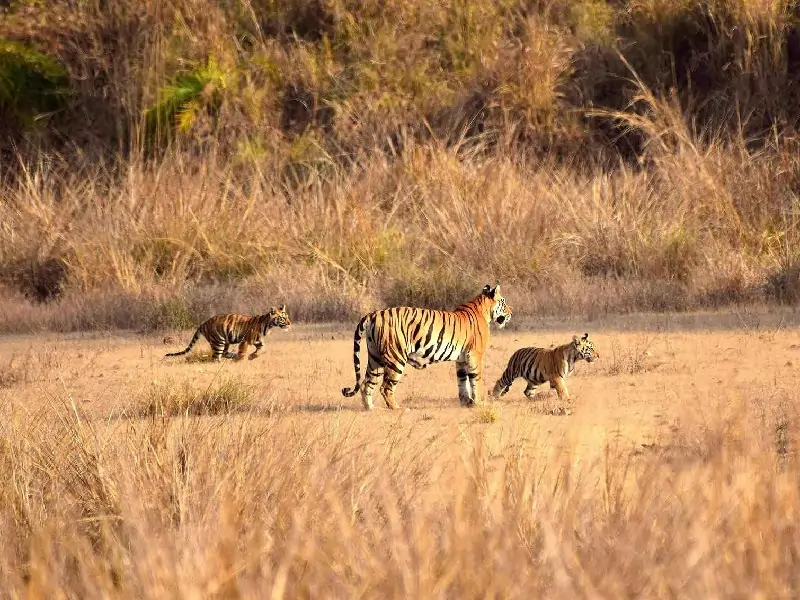
Kanha National Park, also known as Kanha Tiger Reserve, is one of India’s most celebrated wildlife destinations. Spread across a wide area of 2,074.31 sq. km, with 940 sq. km of core area and 1,009 sq. km of buffer zone, it is one of the best habitats for tigers in India. Renowned for its thriving tiger population, rich biodiversity, and vast sal forests, Kanha represents the essence of Central Indian wilderness. It is also the landscape that inspired Rudyard Kipling’s The Jungle Book, earning global recognition. Today, Kanha National Park stands as a model for ecotourism and conservation excellence.
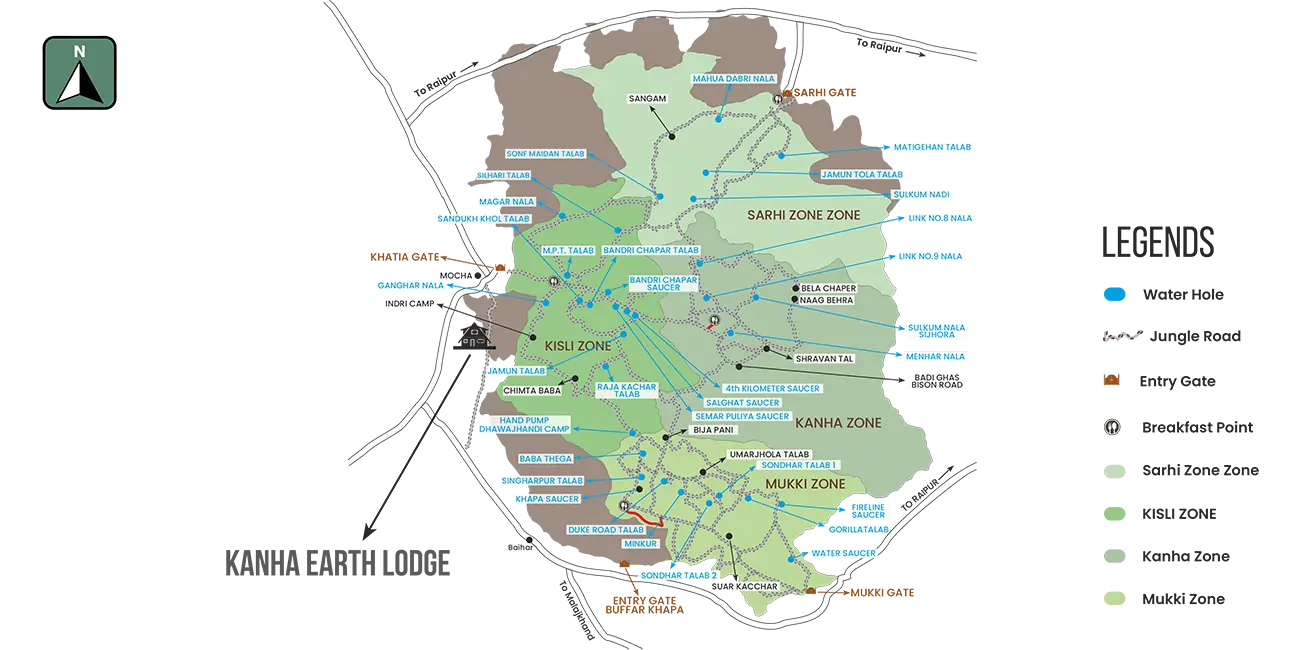
Kanha’s conservation history dates back to 1879, when it was first protected as a forest reserve. In 1933, it was declared a sanctuary, then officially designated as a National Park in 1955, and in 1973 it became one of the first reserves to be included in Project Tiger, a landmark initiative to protect India’s endangered tiger population. Over the last several decades, Kanha has seen sustained efforts in habitat restoration, wildlife reintroduction, and scientific research, making it one of India’s best-managed tiger reserves.
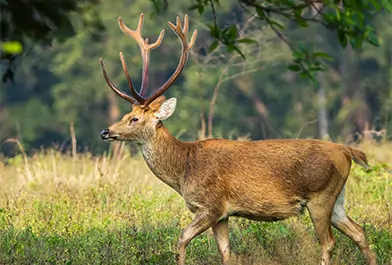
Kanha National Park is considered a gold standard in Indian conservation due to its successful predator–prey balance, healthy tiger numbers, and pioneering work in grassland management. It is celebrated for the historic revival of the hard-ground barasingha (swamp deer), once near extinction, now flourishing due to focused conservation interventions. Kanha’s management strategies are widely referenced by conservationists across the country.

In Kanha National Park, the four major safari zones are declared as the core zones. The core zone is the central part of the tiger reserve and it shares its boundary with the buffer zone. The buffer zone is the area that surrounds or adjoins the core areas where nature is conserved alongside compatible human uses of the land or water.
The four core zones which are accessible from different entry gates. All these core zones are very popular among tourists.
| KANHA CORE SAFARI ZONES | |||
| Core Zones |
Entrance Gates (Full Safari) |
Entrance Gate | Distance from the Lodge |
| Kanha Zone | Khatia / Mukki / Sarhi Gate | Khatiya/Sarhi/Mukki | 9 Km |
| Mukki Zone | Khatia / Mukki Gate | Khatiya/Mukki | 45 Km |
| Kisli Zone | Khatia / Mukki / Sarhi Gate | Khatiya/Sarhi/Mukki | 9 Km |
| Sarhi Zone | Khatia / Sarhi Gate | Khatiya/Sarhi | 60 Km |
Kanha buffer zones are accessible from different entrance gates. Currently there are four
buffer entrance gates to access the national park:
The Buffer Zones of Kanha National Park are: Khatia, Sijhora, Phen and Khapa. Kanha buffer zones are accessible from different entrance gates. Currently there are four buffer entrance gates to access the national park:
| KANHA BUFFER ZONES | |||
| Safari Zone | Entrance Gate for Safari Zone | Entrance Gate | Distance from the Lodge |
| Khatia Zone | From Khatia Entrance Gate | Khatia | 9 Km |
| Khapa Zone | From Mukki Entrance Gate | Mukki | 45 Km |
| Phen Zone | Separate gate, ideal for Mukki gate resorts | Mukki | 45 Km |
| Sijora Zone | From Sarhi Entrance Gate | Sarhi | 60 Km |
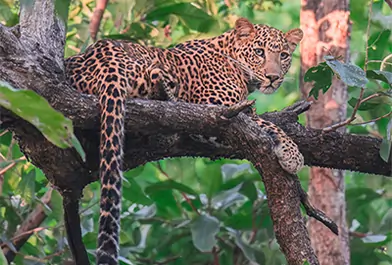
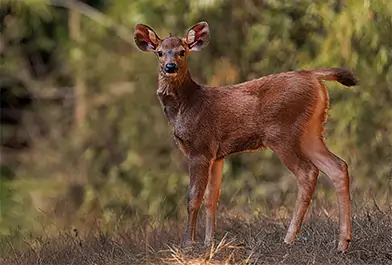
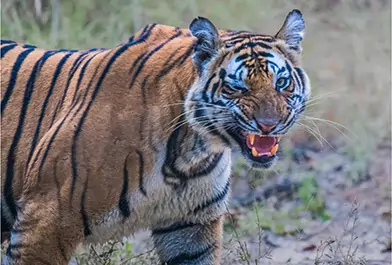
Kanha’s undulating landscape is dotted with dense groves of vegetation, hillocks and meadows. Of all these habitats, it is Kanha’s meadows that are its lifeline, as they sustain large numbers of Chital, Sambar, Barasingha and Gaur, which in turn support populations of predators and co-predators like Tigers, Leopards, Wild Dogs, Jungle Cats and Foxes.
Kanha National park is primarily a moist Sal and moist mixed deciduous forest where Bamboo, Tendu, Sal, Jamun, Arjun and Lendia flourish. It is home to over 1,000 species of flowering plants and about 300 species of birds. Birdlife includes Crested hawk eagle, Crested serpent eagle, Lesser whistling duck, Red wattled lapwing, Yellow wattled lapwing, Indian roller, Oriental magpie robin, Red vented bulbul, Cattle egret, Indian pond heron, White rumper vulture, Long billed vulture, Red headed vulture, Jungle owlet, Spotted owlet, Indian scops owl and White rumped shama amongst others.



Kanha enjoys a varying weather type which remains moderately warm in Summers & gets extreme cold in Winters. When on Safari, besides wearing appropriate clothing there are a few essentials that can make the overall experience remarkable. Here is a list of items that can be carried along;
While jeep safaris in Kanha National Park remain the primary attraction, visitors can also enjoy the following activities and attractions nearby:
Kanha is home to the Baiga and Gond tribes, known for their deep forest knowledge, traditional arts, and sustainable living practices. Explore local crafts and pick up souvenirs at weekly tribal markets (haats) that highlight the cultural richness of the region. If your visit coincides with a harvest festival or special occasion, you might even have the chance to witness the region’s dance and music traditions.
Designated buffer zones around Kanha allow visitors to enjoy guided walking trails, birdwatching, and interpretive nature experiences, an excellent complement to jeep safaris. Guests can choose between a gentle walk by the Banjar river or a forest walk on the Khatia trail, providing a serene end to a wonderful day in nature. Rata sunset point offers stunning panoramic views of the forest for sunset.
Kanha is one of the original Project Tiger reserves and continues to contribute significantly to India’s tiger conservation success. Its landscape management, anti-poaching protection, and scientific monitoring have been pivotal in sustaining a healthy tiger population.
The recovery of the hard-ground barasingha is one of India’s greatest conservation achievements. Once reduced to fewer than 70 individuals, intensive protection, habitat management, and relocation efforts have revived the population, making Kanha National Park the exclusive stronghold of this species.
Kanha National Park focuses on:
To preserve Kanha National Park’s ecosystem, visitors must follow key rules:

How to Book a Jungle Safari in Kanha National Park?
Which is the best time to visit Kanha National Park?
Which is the Best Zone in Kanha National Park?
Where is Kanha National Park Located?
In Which State is Kanha National Park Situated?
What is Kanha National Park Famous for?
What Are the Chances of Spotting a Tiger in Kanha National Park?
What Is the Tiger Population in Kanha Tiger Reserve?
How Many Days Are Enough to Explore Kanha National Park?
